


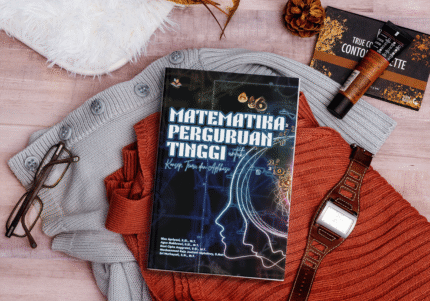

Language Acquisition: Theory, Development, and Practice in the Digital Age
Description
- Penulis : Dr. Dwi Sloria Suharti, S.Pd., M.Pd., Syarifah Hidayani, M.Hum., Tira Nur Fitria S.Pd., M.Pd., Dr. Dewi Sari Wahyuni, SS, M. Pd., Dr. Niswatin Nurul Hidayati, S.S., M.A., CDMP.
- ISBN :
- Copyright © Juli 2026
- Ukuran: 15.5 x 23 cm
- Hal: 496
- Soft Cover
- Book Paper
- Sinopsis:Language acquisition is one of the most fascinating and essential areas of study in linguistics, psychology, education, and cognitive science. It explores how human beings naturally develop the ability to understand and use language, beginning from infancy and continuing throughout life. In today’s interconnected world, where technology has transformed the way people communicate and learn, understanding the processes of language acquisition has become more important than ever.
This book, Language Acquisition: Theory, Development, and Practice in the Digital Age, is written to provide students, educators, researchers, and language practitioners with a comprehensive understanding of the theories, developmental processes, and practical applications of language acquisition in contemporary educational contexts. It bridges classical theoretical foundations with current perspectives influenced by digital technology, artificial intelligence, online learning environments, and multilingual communication.
The chapters in this book present a systematic discussion of major language acquisition theories, including behaviorist, nativist, cognitive, interactionist, sociocultural, usage-based, and connectionist perspectives. Beyond theoretical discussions, the book explores language development across different stages of life, individual differences among learners, bilingualism and multilingualism, learner autonomy, digital learning strategies, and the growing role of educational technology in facilitating language acquisition.
As education continues to evolve in response to rapid technological advancement, language learning has expanded beyond traditional classrooms into virtual spaces supported by digital platforms, mobile applications, social media, and artificial intelligence. These developments create both opportunities and challenges for educators and learners. Therefore, this book also highlights practical approaches for integrating digital tools into language learning while maintaining meaningful interaction, critical thinking, and learner engagement.
The primary objective of this book is to connect theoretical knowledge with educational practice. Readers are encouraged not only to understand the underlying principles of language acquisition but also to apply them in designing effective language instruction, developing innovative learning materials, and fostering lifelong language learning.
The completion of this book would not have been possible without the support and inspiration of many individuals who have contributed directly and indirectly to its development. We extend our sincere appreciation to colleagues, reviewers, students, and all those whose valuable insights and constructive feedback have enriched the quality of this work.





Reviews
There are no reviews yet.